
 Prices in Canadian Dollars.
 Prefer to call and speak to a floral agent? 1-877-277-4787

Planning Your Garden
Planning Your Garden
Although most home gardens happen by chance ( a plant here and soon another plant there) it’s well known that a little planning goes a long way in any endeavor. Take a few minutes now to think about the layout of your garden
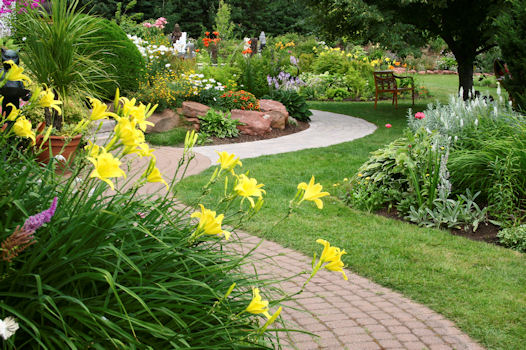
You’ll have some work, and lots of steps to complete before you’re done, so planning now can minimize the problems. Too often home gardeners simply run off to their local garden center and return with an armload of seed, bedding plants, shrubs, and fertilizers. This haphazard approach works on occasion, but to ensure that you have a beautiful garden for years to come here are some simple rules to follow.
Check The Zone Map
Nothing about gardening is more depressing than watching your plants shrivel and die and not knowing why. Climate is the dominating factor in the plant growth. Over 50% of the growth and development of your plant crop is determined by climate. So it just makes sense to take the time up front to select the right plants for you particular climate. The hardiness or climatic zone map of Canada divides the country into ten zones. These zones are rated from 0, in the coldest region, to 9, in the mildest region. Ratings are based on a number of climatic conditions, most notably the coldest temperature reached and the length of the growing season. You need to use this map to establish which plants will survive in the “zone” you are planting in based on the rating the plant has received. If your garden is in zone 5, for example, you can choose plants rated from zone 0 to zone 5. A limitation of the hardiness zone map that should be considered is that any zone can have areas within it which merit a different rating based on their local conditions or microclimate. So it is always best to err on the side of caution rather than choose plants that push the limit. To find the zone you are in simply go to your favorite search engine and type in “plant hardiness zone for [your location]”.
Determine where the best sun for the growing season will be
Take note of the buildings and trees that may block areas of your yard. Estimate where the sun is going to be tracking across your yard during the growing season and plan accordingly. Place the shade loving plants in the path that gets shaded at the hottest time of the day. And in turn you will want to place your sun loving plants where they will receive the most sun possible. This will help ensure that all plants reach their optimum potential. Don’t take this part of your planning lightly (no pun intended), it plays such an important role that some serious gardeners will actually go to the extent of utilizing a light meter.
Make a Drawing
Before you start planting make a sketch of your garden, top view. It doesn’t have to be a masterpiece, but should be in relatively good scale, so you have an idea just how big that back forty really is. Try pacing off the dimensions if you don’t want to get technical.
A good scale drawing will give you an idea of how much seed to buy, how many plants you can cram into that space, and how much work it might turn out to be. Draw in any trees, buildings that might cast shade (back to the importance of sunlight), low or high spots, anything special about the site. There are computer software programs for home landscape design that may be helpful here.
In a big garden it’s useful to break it down into sections. One for the herbs, one for annuals, one for the white flowers, you get the idea, anything that seems logical to you.
Consider how far you have to carry your flowers back to the shed. Put the big heavy sunflowers closer to home. Put the ones that need a lot of attention and extra water close to the hose outlet. You can use a row of tall plants like sunflowers to shade a row just beside it, a form of companion planting.
Proper Soil Preparation and Drainage
Dirt is Dirt, Right?
Wrong! Remember that your garden soil is home to your plants and your garden will only be as good as the soil you plant it in so preparation is key. Here are some tips
- Remove all grass, vegetation and weeds with a spade or kill with a herbicide designed for the task (check with your local garden center). Always make sure that you don’t have grass or weeds growing where you want to plant. Note: When using a herbicide always follow directions and wait at least one (1) week after you before you plant.
- Spread 2″ – 3″ of organic material such as well-rotted sterilized manure, composted leaves or compost, over the bed.
- Turn the soil over to a depth of 6″ – 8″ with a garden spade, fork or roto-tiller, breaking up heavy clods and working in the organic material well. Rake level.
Annuals versus Perennials
Which you choose will depend a lot on how much time you want to invest each year in planting and your garden itself.
- Annuals are a one-season splash of color, blooming almost immediately and continuing until the first killing frost. They also tend to be heavy on maintenance . As they require close attention to watering, fertilizing, weeding and deheading to continue blooming. Here are easy suggestions for beginners.
-Pot Marigold (Calendula)
-Pinks (Dianthus)
-Nasturtium (Tropaeolum)
-Pansies (Viola)
- Perennial plants on the other hand will grow and spread for years, although the initial cost is greater they are a permanent addition to your garden. After a few years some perennials may need dividing, giving you and your friends hundreds of new plants. Soil preparation is extremely important when planting perennials as you have only one chance to get it right. Here are easy suggestions for beginners.
– Peony (Paeonia)
– Black eyed Susan (Rudbeckia)
– Cranesbill (Hardy Geranium)
– Stonecrop (Sedum)
Buying Seed
If you’re just getting started it’s easy to go overboard on seed. Don’t try one of every flower in the catalogue. Stick to two or three that you are familiar with and grow lots of these. Pick another two or three to experiment with, so that next year you could add one or all of these to your garden and experiment with a few more.
Bedding Plants
The term “bedding plant” is a pretty broad one and describes pretty much any plant that is purchased for gardening, potting, or landscaping. Bedding plants can become available as early as March and are usually a spring purchase (remember to check your zone map!). Generally you can find them in such places as your local farmer’s market, hardware store, grocery store and garden center. For many home gardeners bedding plants are a natural choice when planting their garden. However if you are thinking of using bedding plants why not grow them yourself, here are the steps to follow when starting bedding plants from seed. On the other hand if you have neither the desire, space, or time to start from scratch here are a few tips for purchasing bedding plants.
- Bedding plants are considered best to buy if they are still blooming.
- Select plants that are suitable to the selected site. Most garden centers will list the specific exposure, soil and cultural requirements for a variety of plants. In the absence of signs with this information, read the tag on each variety.
- Prepare the soil well before you plant. The structure of either clay or sandy soil types can be changed by adding organic matter such as Canadian sphagnum peat moss, well-rotted manure or garden compost.
- Commercially bought bedding plants usually have a complete interlocking root system in their pot. If you transplant the entire pot, including the soil, you may encounter serious moisture problems with the roots. It is better to clean away some of the soil, without hurting any of the roots, and planting into prepared soil of your own.
- Water your plants immediately after transplanting them and daily until they have become established.
Spacing Plants
 This doesn’t mean blasting them out the air lock of your interstellar craft! There’s a real art to planting seeds and transplants at exactly the right distance to maximize yield and minimize open, wasted ground that will probably grow weeds anyway. The best spacing will give the plants all the room they need to fully develop, and to fill in completely between plants and down the rows, leaving just enough room for you to walk along and pick your harvest. Ideally they’d all be at waist height too so we won’t have to bend over!
There’s a well known rule in plant development about how much yield you can get from a given area. If you plant one wheat seed in a 6″ pot, you’ll get approx 5 grams of wheat seed for yield. (I’m guessing here on the yield, but you’ll get the point). If you plant 10 wheat seeds in the same size pot, you’ll still get a total of about 5 grams of wheat seed. The seeds may be smaller and more numerous, but the net usable yield will be the same. So too much crowding is not useful. Efficient use of the space, however is good, and if you can add extra inputs like fertilizer and water, then you can increase the yield on that given piece of garden.
Here’s a greenhouse growers tip. You can plant two rows close together with no path between, because you can pick them from the outside of each row. Saves you weeding down one whole row, and you might cram one or two more rows into that bed by the time you’re done. Try planting in beds of 5 or 6 rows close together to make a span of about 4 feet, that can be reached easily from either side and no wasted space between the rows. The beds can be spaced apart for walking and working room.
Placing Perennials
For ease of cultivation, especially year end clean up, consider placing the perennials wide enough apart so that you can run your rototiller between the rows. Fill in these large spaces with annuals that can be tilled in. Try putting the perennials around the edges and away from the main area so you will have a large open area to cultivate in the fall rather than a whole bunch of small rows or blocks. Just for looks, it’s usually better to put perennials in groups rather than single plants spaced far apart or rows of single plants.
Companions
 This could mean having a friend help you hoe, but usually it refers to planting certain species together as a natural pesticide, fertilizer or for other benefits. The strong smell of marigolds keeps many insects at a distance. Have you ever seen a cabbage fly alight on a marigold? Marigolds around the edges of the garden and close to crucifers like broccoli and cabbage tend to keep the cabbage worms and other insects away. This is not fool proof, but may reduce the numbers. It looks nice too.
Beans add nitrogen to the soil, so they can be planted in any area that had heavy use the year before, like where the sunflowers or the corn was.
Sunflowers and squash seem to like each other, the squash shades the roots of the sunflowers, the sunflowers shade the leaves of the squash, and they fill up all the space, high up and along the ground for efficient use of the square feet.
You can sometimes plant two things in the same row. This works well if one is a root crop and the other is a leaf crop. Try lettuce and carrots. The lettuce comes up early and is picked and gone in time for the carrot tops to really develop, driving the growth of the root. If you do this right it’s very effective. Try also spinach (very early) and beets.
You can also plant sequentially, fall planted spinach will be finished in time to put in the beans or transplant the tomatoes into the same spot. You can also plant between the rows. For instance two rows of early spinach could have a row of statice between them. The statice has a bit of help from the micro-environment created by the spinach plants and then they’re gone before they get in the way of the main growth of the statice.
Don’t forget about replanting crops like dill, lettuce, spinach, cosmos, and other fast crops for repeated harvest through the summer. The spinach planted in the heat of the summer may not be useful, but the latest planted ones will give you a good fall harvest of fresh spinach when everyone else has given up for the season.
Orientation
There’s much discussion about north/south rows vs east/west rows. You need to consider whether you want to catch the late afternoon hot sun on your squash, or do you want to shade the lettuce with a row of strawflowers on the south side of them. During the summer in Alberta the sun actually rises in the north east and sets in the north west, and never gets very far south. It’s mostly straight above us.
Structures
You may want to extend the season by using hot caps or tunnels in the early spring and again in the fall. You can also use shade tunnels, or add extra heat to the peppers and even cantaloupe with the same tunnels covered in white cloth instead of clear poly. For warming up crops always use two layers of poly, it’s the air space between the layers that provides the insulation. When you plant your rows you might want to make them the same size as your tunnels.
Rows or Beds
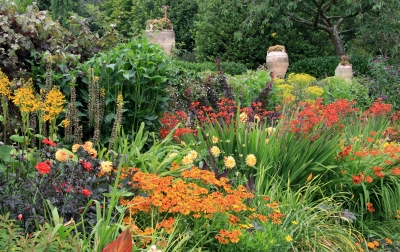 Some plants seem to do better, and are easier to handle when planted in beds rather than single rows. Try this with spinach, lettuce or other greens in beds 12 – 18″ across. Carrots are good in 6 – 8″ beds. Garlic and onions like to be almost touching when they are mature, so plant these in 4 or 5 closely spaced rows, like one wide row 4 garlics across. Don’t make beds so wide that you can’t comfortably reach across to work on them. Some grains and grasses will do better in beds because they hold each other up, where a single row stand will tip over too easily.
Hogs
Some plants are just pushy. Squash plants take up a lot of room, so plant them on the edge of the garden where they can spread out. Sunflowers use up a lot of the water in the soil and create a lot of shade. Give them room to flourish.
These are all just suggestions. If we could implement all of these ideas as well as the nifty tricks we learned from the neighbour and from grandma, we’d all be great gardeners! Try a few of them. Some techniques will work well for you and some won’t. Gardening always involves experimenting, that’s part of the fun. So enjoy yourself & happy gardening!